Project Architecture
Theory of Action
The strategic framework that guided the design, implementation, and evaluation of this AI capacity building project.
The Strategic Framework
This Theory of Action weaves the concepts of AI readiness, coherence, and ambidexterity together, outlining the strategic path for this project.
I strategically lead the Powerful Learning Team's first fee-for-service project by:
- 1Seeking to understand the context and history
- 2Practicing deep listening to discern team dynamics
- 3Cultivating a positive working environment that fosters relationship building
- 4Harnessing the power of my own skills
- 5Learning iteratively while evaluating impact
I will establish a blueprint for executive-level AI readiness programming that can be scaled.
The immediate purpose of this blueprint was to secure additional fee-for-service engagements, demonstrating a replicable model for AI capacity building at the executive level.
Digital Promise can become an ambidextrous organization with sustainable revenue streams, fueling its growth towards reaching 30 million learners.
By scaling these efforts and diversifying revenue streams, Digital Promise is positioned to balance existing strengths with new opportunities for impact.
Project Logic Model
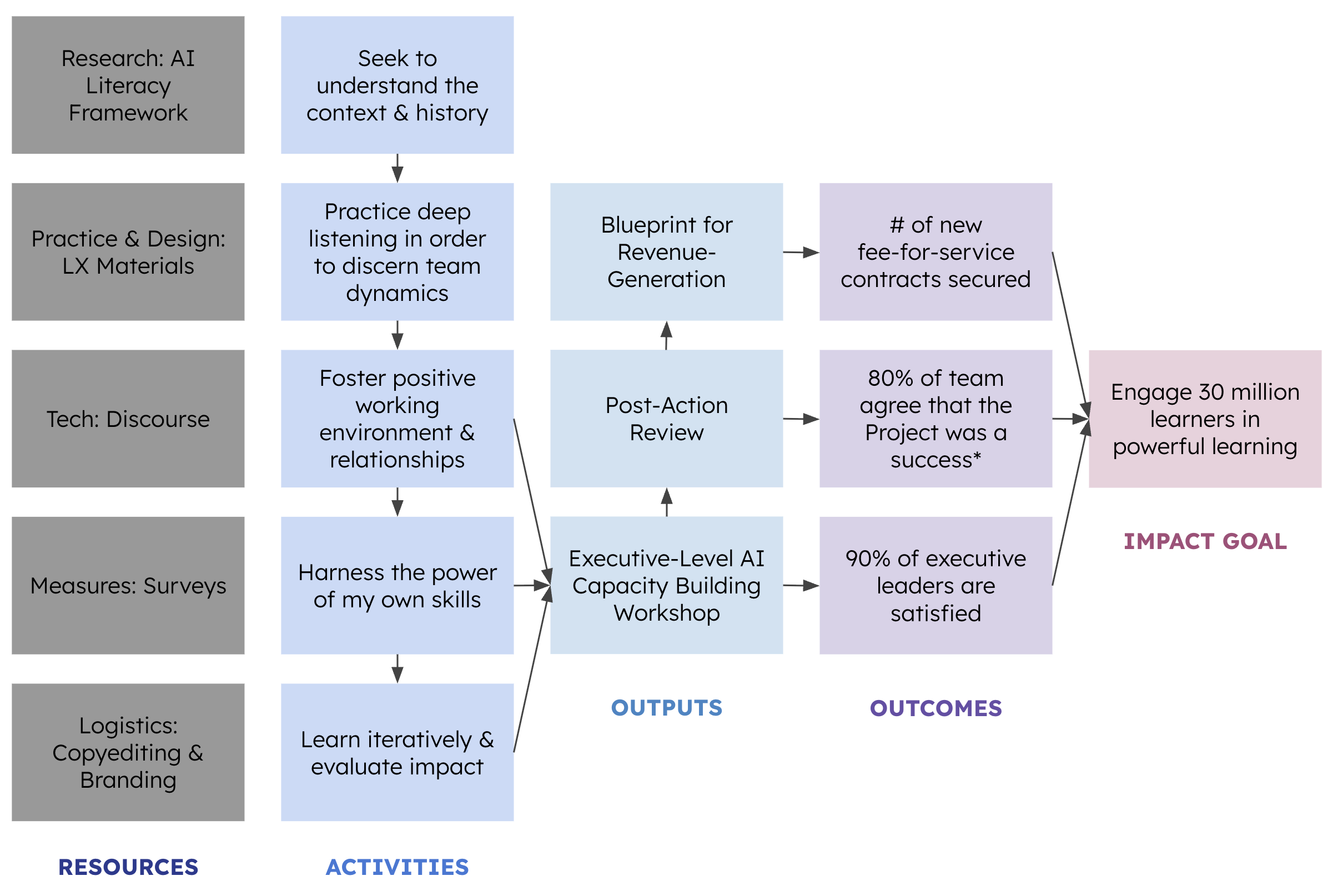
The “if” statements from the Theory of Action were translated into a logic model, connecting activities to resources, outputs, outcomes, and the ultimate impact goal.
Resources
AI Literacy Framework, Learning Experience Materials, Technology Platforms, Survey Instruments, and Branding Assets
Activities
Contextualize, deep listen, foster relationships, harness skills, and iterate collectively with the team
Outputs
Executive-Level Workshop, Post-Action Review, and a Blueprint for Revenue-Generation
Outcomes
New fee-for-service contracts, 80% team success rating, and 90% executive satisfaction
36-Day Sprint Timeline
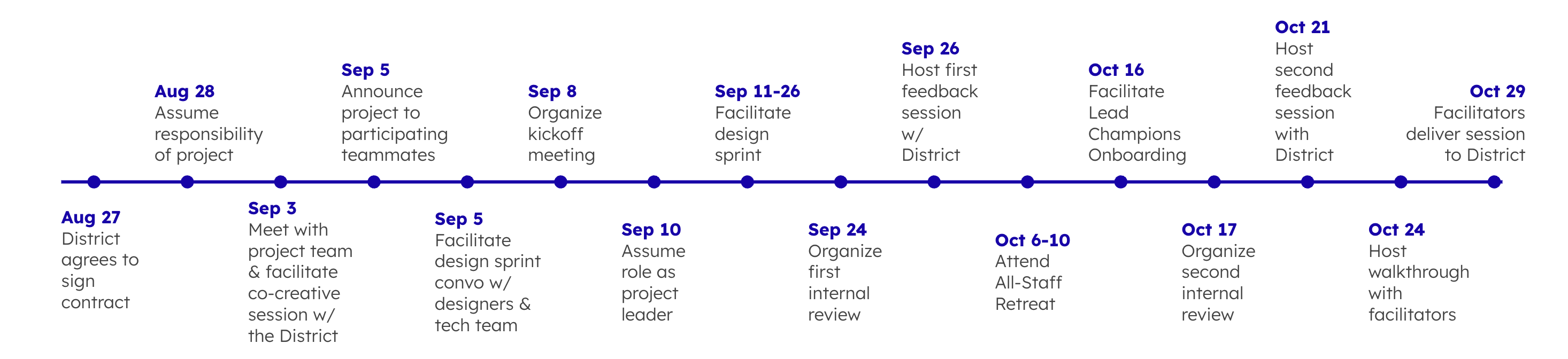
This project was initially planned for January 2026, but the district requested an earlier start in October. Accounting for weekends and an All-Staff Retreat, the team had just 36 production days to deliver two separate components.
Adaptive Leadership in Action
Through a human-centered, adaptive leadership approach grounded in deep listening and collaboration, I built trust across the design team, which led to my appointment as team lead on September 10. In this role, I facilitated daily standups to maintain alignment and momentum, culminating in a full-day, in-person workshop for executive leadership. The case study presented here reflects one of two components delivered as part of the first phase of a broader district partnership.